Montag, 20. September 2010

The Royal Tokaji Mad Scholarship


As introduction to this and the next blog entries, let me tell you how it all started: For reasons I would not know details about (but apparently based on my WSET diploma exam results), I was awarded the first Royal Tokaji Mad Scholarship ever. So at the occasion of WSET's Award and Graduation ceremony held at London's Guildhall last January, I had the honour of meeting Hugh Johnson, founding shareholder of the Royal Tokaji Wine Company, and Ben Howkins, the International Sales Director. The prize was a 2-day trip to Tokaj region, and my experiences during this recent journey are subject of the following reports.


Als Einleitung für diesen und die nächsten Blog-Einträge, lassen Sie mich kurz erzählen, wie alles anfing: Aus Gründen, die sich mir nicht so ganz erschließen (aber auf Grundlage guter Ergebnisse bei den WSET-Diplomprüfungen), wurde mir die erste Royal Tokaji Mad Scholarship verliehen. So wurde mir anlässlich der WSET Abschlussfeier und Preisverleihung in Londons Guildhall im vergangenen Januar die Ehre zuteil, Hugh Johnson (Gründungsmitglied und Anteilseigner der Royal Tokaji Wine Company) sowie Ben Howkins, den Internationalen Vertriebsleiter, kennenzulernen. Der Preis bestand in einer zweitägigen Reise in die Region Tokaj, und von dieser werde ich im Folgenden berichten.


Michael Broadbent MW and Hugh Johnson


Hugh Johnson and Ian Harris, WSET's CEO


Ben Howkins, Isabel Kottmann and Hugh Johnson


The Guildhall is one of the most festive and impressive venues in London.

So from September 13-15 I was invited to discover Tokaji. The region lies approx. 240km north-east of Budapest and is named after its historic commercial center, the village of Tokaj (at the foothills of the eponymous mountain). Tokaji means "from the region of Tokaj", so I will do my best to avoid using the term "Tokaji region", a tautology I had already accustomed myself to before the trip...


Tokaji is situated in the Zemplen mountains, which shelter the vineyards from adverse winds and provide viticulturally perfect slopes facing south-east, south and (to a lesser extent) south-west. The rivers Bodrog (deep, narrow, cold) and Tisza (shallow, wide, warm) along with numerous creeks, ponds and tarns regularly generate morning fogs, offering perfect conditions for botrytis cinerea (a fungus) to develop and nourish on the grapes' skins. Depending on the weather, this can turn into either grey rot (unwanted) or noble rot (highly desired). There's not really any viticultural trick able to influence the development of good, but luckily the Tokaj region is very regularly blessed with sunny afternoons, during which the grapes dry up, water evaporates and aromas and sugars are increasingly concentrated in the berries. This natural mesoclimate has brought about one of the most outstanding dessert wine styles the world has ever known.


So war ich also vom 13.-15. September eingeladen Tokaji zu erkunden. Die Region liegt ca. 240 km nordöstlich von Budapest und ist nach seinem historischen Wirtschaftszentrum, dem Ort Tokaj (am Fuße des gleichnamigen Berges) benannt. Tokaji bedeutet aus dem Ungarischen übersetzt "aus der Region von Tokaj", dementsprechend werde ich mich sehr bemühen, die vor der Reise angewöhnte Tautologie "aus der Region Tokaji" zu vermeiden.


Tokaji liegt im Zemplen-Gebirge, welches die Weinberge von adversen Winden schützt und weinbaulich perfekte Hanglagen mit süd-östlicher, südlicher und teilweise auch süd-westlicher Ausrichtung bietet. Die Flüsse Bodrog (tief, schmal, kalt) und Tisza (seicht, breit, warm) sorgen gemeinsam mit zahlreichen Bächen, Gebirgsseen sowie Tümpeln für regelmäßige morgendliche Nebelschwaden, und bieten damit optimale Voraussetzungen zur Entstehung von Botrytis cinerea (einem Pilz), welcher sich von den Häuten der Trauben ernährt. Je nach Wetter kann er sich zu grauer Fäule (unerwünscht) oder aber Edelfäule (sehr erwünscht) entwickeln. Dabei gibt es leider keinen weinbaulichen Trick, mit dem man die Entstehung der guten Fäule herbeiführen könnte, aber glücklicherweise ist Tokaji regelmäßig mit sonnigen Nachmittagen gesegnet, während derer die Trauben trocknen, Wasser verdunstet und sich Aromen sowie Zucker zunehmend in den Beeren konzentrieren. Dieses natürliche Mesoklima hat einen der herausragendsten Dessertweinstile hervorgebracht, den die Welt je gesehen hat.


Vineyards in Tokaji with the Tokaj mountain in the background.

Weinberge in Tokaji mit dem Berg Tokaj im Hintergrund.


Although both winner and sponsors may be quite crazy indeed, the name Royal Tokaji Mad Scholarship actually originates from the village of Mád, where the winery as well many of the region's best single vineyards are located.


Obwohl sowohl Gewinnerin als auch Sponsoren durchaus als leicht wahnsinnig durchgehen würden, stammt der Name Royal Tokaji Mad Scholarship eigentlich vom Dorf Mád, wo nicht nur der Betrieb, sondern auch viele der besten Einzellagen Tokajis beheimatet sind.


During the scholarship I was accommodated at Mádi Kúria, a lovely castle hotel in Mád.

Während der Reise durfte ich im charmanten Schlosshotel Mádi Kúria in Mád wohnen.


Currently, the total vineyard area of Tokaji is approx. 5,400 ha. 900 of these belong to the commune of Mád.

Die gesamte Rebfläche in Tokaji beträgt derzeit ca. 5.400 ha. Davon gehören ca. 900 ha zur Gemeinde Mád.


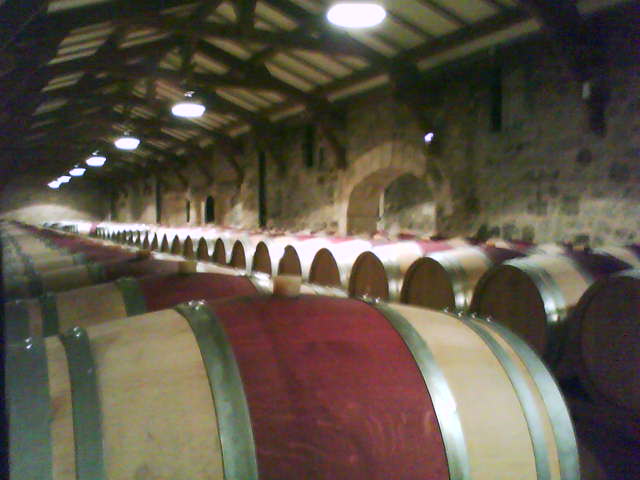
All these portals in Mád lead to a wide-spread underground tunnel system, which is used by wineries all over Tokaji to store wines (both in barrel and bottle). With a constant temperature all year round and a high humidity these conditions are ideal for long-term wine storage.


Alle diese Pforten in Mád führen hinab in weit verzweigte unterirdische Gänge, in denen die Weingüter in ganz Tokaji seit jeher ihre Weine lagern (sowohl in Fässern als auch in Flaschen). Mit einer ganzjährig konstanten Temperatur und hohen Luftfeuchtigkeit bieten die Gewölbe ideale Bedingungen zur langfristigen Weinlagerung.


Tokaji's substratum is of volcanic origin, usually covered with a topsoil of clay and/or loess. There are immense local differences, however, even within a single plot! The nature and chronological history of the volcanic soil as well as the nature and depth of the topsoil (along with the microclimate) generate grape material, which may give a hint or a clear expression of terroir. More of this in the following blog entry, which amongst other details will have a closer look at the Royal Tokaji Wine Company's top vineyards.

Das Substrat in Tokaji ist vulkanischen Ursprungs und i.d.R. mit einem Oberboden aus Ton und/oder Loess bedeckt. Doch es gibt lokal große Unterschiede, zum Teil sogar innerhalb ein und derselben Parzelle! Die Art und zeitliche Entstehung des Vulkangesteins sowie die Art und Tiefe des Oberbodens liefern (in Kombination mit dem Mikroklima) Trauben, welche teilweise in Nuancen, teilweise in deutlicher Ausprägung die Besonderheiten der Einzellage, aus der sie stammen, ausdrücken können. Doch dazu im folgenden Blog-Eintrag mehr, welcher u.a. die Besonderheiten der verschiedenen Spitzenlagen der Royal Tokaji Wine Company beschreiben wird.


The most important grape variety used is Furmint. It is a very vigorous variety, but with sufficiently low yields able to produce powerful yet elegant wines of distinction. Typical aromas of youthful wines are fresh, ripe apples, developing into rather nutty and honeyed notes upon ageing. The variety is very prone to botrytis, so ideal for sweet wine production. But estates are also increasingly interested in producing high quality dry Furmint with a high ageing potential, in order to meet international market demand, and also for personal belief and paying tribute to this versatile, ancient variety.

The second blending component is normally Hárslevelü (= linden leaf), which is late ripening, but not as prone to botrytis as Furmint. It contributes floral aromas (linden leaf), spicy notes and a pronounced acidity. Sárga Muscotály (Muscat de Lunel = Muscat Blanc à Petits Grains) is also found in blends frequently and offers an aromatic, perfumed bouquet.

Some estates also blend small quantities of Zeta (a Furmint X Bouvier crossing, early-ripening and very prone to botrytis), Kobar and Kövérszölö (translation: fat grape), or experiment with these.

Die wichtigste Rebsorte ist Furmint. Diese ist grundsätzlich sehr wachstumsintensiv, mit ausreichend geringen Erträgen jedoch imstande, kräftige und gleichzeitig elegante Weine mit hoher Unterscheidungskraft hervorzubringen. Typisch für junge Weine sind dabei frische, reife Apfelaromen, mit zunehmender Reife treten dann Nuss- und Honigtöne in den Vordergrund. Furmint ist sehr anfällig für Edelfäule und daher ausgezeichnet zur Süßweinproduktion geeignet. Aber die Weingüter sind auch zunehmend daran interessiert, einen trockenen Furmint mit Alterungspotential in ihr Portfolio einzubauen, teils aufgrund der Marktnachfrage, teils aus persönlicher Überzeugung und als Ehrerbietung an diese vielseitige, antike Rebsorte.


Der zweitwichtigste Verschnittpartner ist die Rebsorte Hárslevelü (= Lindenblatt), welche spät reift, aber nicht so anfällig für Botrytis ist wie Furmint. Sie liefert blumige (Lindenblatt) und würzige Noten sowie eine rassige Säure. Sárga Muscotály (Muscat de Lunel = Muscat à Petits Grains) ist ebenfalls in vielen Weinen zu finden, mit seinem aromatischen, perfümierten Bukett.


Einige Weingüter verwenden auch geringe Anteile von Zeta (eine Kreuzung zwischen Furmint und Bouvier, frühreifend und sehr anfällig für Botrytis), Kobar und Kövérszölö (übersetzt: fette Traube), oder experimentieren mit diesen.


As in the rest of Hungary, traditionally 5BB Teleki is the most widely used rootstock, named after Zsigmond Teleki, an Hungarian viticulturist and breeder from Villány. For new plantings other rootstocks may offer advantages though - Royal Tokaji, for example, uses low-vigour Berner (particularly important for Furmint). Berner is also quite drought-resistant, an attribute not as important in cool, rainy vintages such as 2010...
Wie im übrigen Ungarn ist 5BB Teleki der traditionell am häufigsten verwendete Wurzelstock , benannt nach Zsigmond Teleki, einem ungarischen Winzer und Rebstock-Züchter aus Villány. Bei Neupflanzungen ist man aber durchaus offen für Neues - die Royal Tokaji Company etwa verwendet Berner, welcher geringen Wuchs verspricht (besonders wichtig für Furmint). Berner ist auch relativ dürre-resistent, was allerdings in kühlen, verregneten Jahrgängen wie diesem keine große Rolle spielt...


The harvest is done by hand, with normally passing 3-5 times through every plot for optimal selection.
Healthy, ripe grapes will be usually vinified into dry varietal wines, like the above mentioned Dry Furmint becoming increasingly popular. Fermentation in stainless-steel tanks and prevention of malo-lactic fermentation is common, in order to preserve a maximum of varietal primary aromas.
Overripe grapes with a light or partial botrytis affection are increasingly used for Late Harvest wines, a relatively recent style with as many shapes and production methods as there are wineries. Details can be found under the following blog entries of the respective wineries.
Then there is the need for base wines, which are fermented dry and into which the nobly rotted grapes will be blended, in order to produce the aszú wines (see below). Again, there's a bit of the winery's indivisual philosophy involved, but grape material for base wines tends to be picked in the very end of harvest, the last batches in other words, and tends to consist of overripe grapes, which had not been affected by botrytis.
The translation of aszú is noble rot, so anytime you find the word aszú mentioned on the label, you will find the distintive botrytis character in the wine. And you will come across the so-called puttonyos system: Traditionally, the degree of sweetness of the wine was measured by how many puttonyok (= hods, each containing 27 kg of shrivelled aszú grapes) were added to a gönc, a 136 l-barrel of dry base wine. With progressing technology, the number of added puttonyok were transcribed into the following minimum residual sugar levels:

3 puttonyos - 3-hodded Aszú - min. 60 g/l RS
4 puttonyos - 4-hodded Aszú - min. 90 g/l RS
5 puttonyos - 5-hodded Aszú - min. 120 g/l RS
6 puttonyos - 6-hodded Aszú - min. 150 g/l RS

Wines with a natural residual sugar of 180 g/l or above were called Aszú Eszencia. But: There is a new legislation! For reasons of simplification, no labelling of Aszú Eszencia will be allowed as from the 2010 vintage. This was decided, in order to avoid any further confusion with (Nature) Esszencia (see below). However, as these wines tend to keep for decades, if not centuries, you may easily come across a bottle of Aszú Eszencia for a very, very long time...

As grapes intended for base wine production are usually harvested after the aszú berries, the nobly rotted grapes are usually stored in stainless steel tanks at low temperatures until the base wine is ready for blending. After blending, the aszú wines are usually fermented in Hungarian oak barrels of varying sizes and then matured for several years in oak (2 years are required by law, but often exceeded) and at least one further year in bottle.
(Nature) Eszencia is a different type of animal: It is gained from the free-run juice of pure aszú berries, collected whilst the berries are waiting to be blended with the base wine. Although quantities are tiny, as you can imagine, and Eszencia is highly appreciated by collectors world wide for reasons of rarity and reputed healing powers, only a small part of this nectar is sold bottled (after years of slow fermentation to 4-5% alc.). Eszencia is mostly used for blending in the Aszú wines before fermentation or topping up of barrels during maturation, in order to increase their concentration.


Here you can see a traditional gönc (136 litre barrel) and a puttonyo (hod with a 27 kg capacity of aszú grapes).

Rechts im Bild ist ein traditionelles gönc (136 Liter Fass) und ein puttonyo (Hotte mit einer Kapazität von 27 kg an edelfaulen Trauben).


Eszencia - made from free-run juice of aszú grapes
Eszencia - aus aufgefangenen Rebensaft von Aszú Trauben gewonnen

Es wird per Hand gelesen, normalerweise in 3-5 Lesegängen je Parzelle, um den optimalen Erntezeitpunkt zu gewährleisten.
Gesunde, reife Trauben werden für gewöhnlich zu trockenen Rebsortenweinen vinifiziert, wie z.B. der oben genannte Furmint trocken (Dry Furmint), der immer populärer wird. Die Gärung in Edelstahltanks und Vermeidung der Milchsäuregärung sind üblich, um ein Maximum an Primäraromen der Rebsorte zu bewahren.
Überreife Trauben mit einem geringen oder teilweisen Botrytisbefall werden zunehmend für Late Harvest (Spätlese) Weine verwendet, eine relativ junge Entwicklung mit so vielen Ausprägungen und Herstellungsmethoden wie es Weingüter gibt. Nähere Informationen hierzu können in den folgenden Blogeinträgen über die jeweiligen Weingütern gefunden werden.
Ferner gibt es den Bedarf für trocken vergorene Grundweine, in welche die edelfaulen Beeren verschnitten werden, um aszú Weine herzustellen (siehe unten). Wiederum hängen die Einzelheiten hier ein bisschen von der jeweiligen Philisophie des Weingutes ab, aber tendenziell wird das entsprechende Traubenmaterial rest ganz zum Schluss der Lese geerntet und besteht somit aus überreifen Trauben, welche nicht von Botrytis befallen wurden.
Die Übersetzung von aszú ist edelfaul, d.h. auf allen Etiketten, welche das Wort aszú beinhalten, wird der spezielle Botrytischarakter im Wein zu finden sein. And Sie werden auf das sogenanngte puttonyos-System stoßen: Traditionell wurde der Restzuckergehalt im Wein daran gemessen, wieviele puttonyok (= Bütten mit einem Inhalt von jeweils 27 kg getrockneten, edelfaulen Trauben) einem gönc (einem 136 l-Fass mit trockenem Grundwein) hinzugefügt wurden. Mit fortschreitender Technologie wurde die Anzahl der puttonyok in folgende minimale Restzuckerwerte übertragen:
3 puttonyos - 3-"gebütteter" Aszú / 3 Bütten Aszú - min. 60 g/l RZ
4 puttonyos - 4-"gebütteter" Aszú / 4 Bütten Aszú - min. 90 g/l RZ
5 puttonyos - 5-"gebütteter" Aszú / 5 Bütten Aszú - min. 120 g/l RZ
6 puttonyos - 6-"gebütteter" Aszú / 6 Bütten Aszú - min. 150 g/l RZ
Weine mit einem natürlichen Restzuckergehalt von 180 g/l oder mehr wurden Aszú Eszencia genannte. Aber: Es gibt hierzu eine neue Gesetzgebung! Zur Vereinfachung darf ab dem 2010er Jahrgang kein Wein mehr als Aszú Eszencia deklariert werden. Zweck ist, jegliche weitere Verwechslung mit (Nature) Eszencia (siehe unten) zu vermeiden. Allerdings überstehen diese Weine unbeschadet Jahrzehnte (wenn nicht sogar Jahrhunderte), so dass Sie noch sehr, sehr lange auf eine Flasche Aszú Eszencia stoßen könnten...
Da die Trauben für die Grundweine i.d.R. erst nach den edelfaulen Beeren gelesen werden, werden diese in der Zwischenzeit bei niedrigen Temperaturen in Edelstahltanks aufbewahrt. Nach dem Verschnitt werden Aszú Weine für gewöhnlich in Fässern aus Ungarischer Eiche unterschiedlicher Größe vergoren, und anschließend für mehrere Jahre darin (mind. 2 Jahre sind gesetzlich vorgeschrieben, viele Winzer gehen aber oftmals darüber hinaus) sowie ein weiteres Jahr auf der Flasche gereift.
(Nature) Eszencia in von ganz anderer Beschaffenheit: Sie wird aus dem frei ablaufenden Saft der edelfaulen Trauben gewonnen, gesammelt in der Zeit, in der die Trauben darauf warten, in den Grundwein verschnitten zu werden. Obwohl die Mengen winzig sind, wie Sie sich vorstellen können, und Eszencia von Sammlern weltweit hochgeschätzt wird wegen seiner Seltenheit und angeblich heilenden Kräfte, wird nur ein geringer Teil dieses Nektars in Flaschen gefüllt und verkauft (nach Jahren einer langsamen Vergärung auf 4-5% Alk.). Eszencia wird zum größten Teil unter die Aszú-Weine verschnitten, entweder vor dem Gärungsprozess oder zum Auffüllen der Fässer während der Reifeperiode, um deren Konzentration zu erhöhen.

The first important markets for Tokaji aszú wines were at home in north-east Hungary as well as in Poland. Their importance for the national economy grew rapidly, and in order to protect their origin and establish an official hierarchy of perceived quality differences among the sites, Prince Rákóczi II initiated and established the world's first vineyard classification in 1700. This was supported by the noble and consulted by the best vineyard managers of their time, who would comment on quality, frequency and volumes of aszú berries obtained in the different vineyard sites. By the end of the 18th century, Tokaji wines were highly acclaimed all over Europe, being regularly served at the French and Russian courts, the preferred present of state by the Austro-Hungarian Empire and referred to as "the wine of kings and king of wines".

During the Soviet regime, vintners were expropriated and high-volume production dominated in the state-owned cooperatives. There was hardly any export to Western countries, and if there was, mainly low quality wines were sold, ruining the once so glorious image of Tokaji wines. This period still shows its aftermath in markets like Germany, where consumer confidence can only be won back slowly. Under the communists, wine-making technology became increasingly outdated and ailing, top vineyards on steep slopes were more and more abandoned and replaced by lesser sites on easier attendable plains, with a low density and rows planted wide enough from each other to make the vineyards accessible for heavy Soviet tractors.
This is how Hugh Johnson and some other investors found the region in 1989, when they decided to revive Tokaji and help the wines to regain their former glory. Their stories will be told subsequently.


Die ersten wichtigen Absatzmärkte für Tokaji Weine waren die großräumige Umgebung in Ungarns Nordosten sowie Polen. Ihre Bedeutung für die heimische Wirtschaft wuchs schnell, und zum Schutz der Herkunftsbezeichnung sowie zur Bildung einer offiziellen Hierarchie unter den Lagen, initiierte und begründete um 1700 Prinz Rákóczi II. die erste Weinbergs-Klassifikation der Welt. Diese wurde vom Adel mitgetragen, unter Beratschlagung der damals besten Weinbergsaufsehern, welche jede Lage aufgrund von Qualität, Häufigkeit und Menge der gelieferten Aszú-Beeren beurteilten. Spätestens seit Ende des 18. Jh. waren Tokaji Weine in ganz Europa berühmt und wurden regelmäßigen am Französischen und Russichen Hofe serviert, häufig als Staatsgeschenk vom Österreichisch-Ungarischen Kaiserreich eingesetzt und weithin bekannt als "Wein der Könige und König der Weine".

Während des Regimes der Sowietunion wurden die Winzer enteignet und Massenproduktion bestimmte die Arbeit der staatseigenen Kooperativen. Exportiert wurde in den Westen nur wenig, und wenn, dann in der Regel Weine von geringer Qualität, die den einst so ruhmreichen Ruf der Tokaji Weine ruinierten. In Märkten wie Deutschland zeigt diese Epoche immer noch Nachwirkungen, denn das Vertrauen der Endverbraucher kann nur ganz langsam zurückgewonnen werden. Unter der kommunistischen Herrschaft wurden die Kellertechnologien immer veralteter und maroder, Top-Lagen an Steillagen wurden verlassen und stattdessen Neupflanzungen in geringwertigeren Tallagen angelegt, da diese einfacher zu bearbeiten waren. Eine geringe Dichte und große Abstände zwischen den Reihen, um die Weinberge den schweren russischen Traktoren zugänglich zu machen, taten ihr übriges.

So fanden Hugh Johnson und einige andere Investoren die Region 1989 vor, als sie beschlossen, Tokaji wiederzubeleben und zu alten Ehren zurückzuverhelfen. Um ihre Geschichten wird es in den folgenden Einträgen gehen.

Budapest Wine Festival

My recent trip to Hungary luckily coincided with the annual Budapest Wine Festival. This takes place in the pictoresque setting of Buda Castle, which along with the wines and the program made more than up for this year's rather lousy weather.

Buda's castle district and its view of river Danube and Pest side.


Whilst the festival featured wines from 250 producers and 15 countries, I obviously concentrated on discovering as many Hungarian wines from as many producers and regions as possible. In other words, I allowed the festival to fulfill its declared mission: "to develop Hungarian wine culture" (Zoltán Zilai, MD of Hungarian Viti- and Viniculture Ltd.).

Most of my best tastings took place at the stands of Tokaji producers (Royal Tokaji Company, Oremus, Patricius), but these I will feature in individual blog entries when reporting about my subsequent trip to Tokaji (by invitation of Royal Tokaji Company, sponsoring my scholarship won during WSET diploma studies).


And it goes without saying that not all wines I tasted were pleasurable. So here are my favourites aside from Tokaji:

2008 Egerszólati Olaszrizling (a white grape variety) from Kántor Tag (a single vineyard in Eger), producer: Gál Lajos. An aromatic, youthful wine ready to drink, with aromas of acacia and honeysuckle, ripe mango and lychee and a hint of vanilla. Good balance between acidity and sweetness (off-dry style) and length.

2007 Kopár Villány Cuvée, made from 50% Cabernet Franc, 40% Merlot and 10% Cabernet Sauvignon all grown in the Kopár single vineyard of Villány region, producer: Gere Attila. All of the blend was aged for 16 months in oak, partly in small barrels of 60l, partly in large casks. The wine is youthful, ready to drink, yet able to age well. It shows fresh raspberry fruit, sweet spicy vanilla and notes of white chocolate and is well balanced by a medium+ level of soft, ripe tannins.

From the same Villány vineyard, but Sauska estate, comes 2006 Kopár Merlot, a fully developed wine, with ripe, sweet red berry flavours, sweet spice characteric and a medium level of silky tannins. It is showing slight notes of oxidation, but in this case not disturbing at all, but rather adding some extra complexity. Should be drunk soon.

2006 Kékfrankos (black grape variety, in Austria and Germany known as Blaufränkisch) from Spern Steiner (single vineyard) in Sópron, producer: Weninger estate. It was made from old vines of approx. 50 years, grown on mica schist and gneiss soils. The wine shows youthful, with red fruit and sweet spice (vanilla), as well as earthy and mineral notes. It is quite high in acidity, which gives this wine a very elegant structure and makes it a perfect match for heavy and oily dishes.


Some of the best tastings were organized by my friend Ágnes Herczeg (Wine Treasury Kft), whom I had met during WSET diploma studies in London.
Culinary delights (Kürtöskalács, a sweet dough baked in a special oven and then flavoured à gusto with chocolate, coconut, almonds etc.)...


... and adventures (cockscomb and bowels served
on a potato-pearl barley mix and decorated with
edible flowers - actually really tasty!)


Numerous concerts, dance performances and exhibitions completed the varied program.


All in all, it was a fabulous experience, alas no bargain one, as the entry ticket at 2,300 Forint (approx. 9,00 EUR) was just that: an entry ticket for 1 day + a tasting glass, and every single sip of wine had to be paid for extra.
More information are available under http://www.aborfesztival.hu/

Freitag, 10. September 2010

IWSC - Australia tasting

For this year's International Wine & Spirits Competition I was invited as associate judge for the panel on Australian wines. Associate judge means that the other (proper) judges assess me on how I am assessing the wines, and the better I do, the higher is the chance that I am invited back next year (hopefully as proper judge then :-).


The two sessions were intense, with 63 wines tasted on day 1 and 66 wines on day 2, and wines being as versatile as Nebbiolo from Heathcote, Viognier-Marsanne blends from South Australia and botrytised Semillon from Riverina & districts, next to the classics Shiraz, Cabernet, Grenache, Riesling and Chardonnay (+blends). The panels were chaired by Peter Nixson (day 1) and Philip Goodband MW (day 2), making sure that palates of the team members were thoroughly calibrated and results were consistent with the rest of the tastings (taking place 6 months per year, starting with France in April, continuing with the rest of European wines until early summer, then catching up with spirits, fortified and sparkling wines, before moving on to the new world in late summer).


Whilst the IWSC boasts the most highly qualified and trained international tasting panels, with each judge being experienced and specialized in the wines they assess, it is also open to new people (the wine trade's next generation, usually WSET diploma students or recently graduated like myself), and knowledgeable consumers getting their say as well. I so much enjoyed the last two days, the great, open-minded atmosphere, the generous advice and training provided by the other judges, the efficient organization (thanks so much to the IWSC team!) and last but not least: many very good and outstanding wines! All in all, a unique experience and opportunity!!!


Trophy winners are honoured at the annual IWSC Banquet, taking place in November at London's Guildhall. For tickets or more information on the competition, please see http://www.iwsc.net/.


Als Associate Judge (beisitzendes Jurymitglied) fuer Australische Weine wurde ich zum diesjaehrigen International Wine & Spirit Competition eingeladen. Beisitzendes Jurymitglied bedeutet, dass die anderen (richtigen) Jurymitglieder meine Bewertungen bewerten, und je besser ich abschneide, desto hoeher ist die Chance, im kommenden Jahr (als hoffentlich vollwertiges Mitglied) wieder eingeladen zu werden.

Die beiden Tage waren intensic, mit 63 Weinen am ersten und 66 Weinen am zweiten Tag, und einer grossen Bandbreite an Stilrichtungen: vom Nebbiolo aus Heathcote, ueber Viognier-Marsanne Verschnitten aus Suedaustralien, Semillon mit Edelfauele aus Riverina & Distrikten, bis hin zu den Klassikern Shiraz, Cabernet, Grenache, Riesling, Chardonnay (+ Verschnitten).

Die Jury wurde von Peter Nixson (Tag 1) bzw. Philip Goodband (Tag 2) geleitet, welche dafuer Sorge trugen, dass die Bewertungen in sich sowie hinsichtlich der uebrigen Kategorien konsistent waren.

Medaillengewinner werden im Rahmen eines alljaehrlich im November stattfindenden Galadiners geehrt (welches in Londons Guildhall stattfindet). Karten und mehr Informationen ueber den Wettbewerb sind unter http://www.iwsc.net/ erhaeltlich.

Donnerstag, 9. September 2010

Wines of Chile Annual Trade Tasting 2010


On Wednesday, 8th of September, Wines of Chile hosted its annual trade tasting at London's Royal Horticultural Halls. Wines from more than 90 estates were on show. Among the exhibitors were many well-known wineries like Errázuriz, MontGras and Santa Carolina, but also "Newcomers" seeking importers like Bisquertt or Vina Maola.
Over the last few years, Chile succeeded in building a reputation among consumers for supplying wines with one of the best price/quality ratios in the world, particularly in the entry-level segment of fruit-forward, easy-drinking young wines.
In two industry briefings during the event, Michael Cox (UK Director of Wines of Chile) and Gerrard Basset MW gave an update on Chile's wine industry. Nielsen data show a steady growth of share by volume both in UK's off- and on-trade markets, with even higher increasing shares by value in the off-trade. Quality keeps improving considerably, and especially wines from cooler regions like Elqui, Casablanca or Limarí generate premium prices + improve the image of Chilean wines in the off-trade. Wines of Chile would wish the on-trade to get more confidence in the premium potential as well and encourage demanding guests to try their top wines and thus help improving acceptance for premium prices. It is acknowledged that distinctive features like rarity / small scale production are needed in order to achieve this in the on-trade, but this can absolutely be found when sought. Furthermore, hardly any other country is as suited to organic / biodynamic viticulture as Chile, due to its opportune climatic conditions, which is another ideally suited approach to distinction.


As a survey carried out by Wine Intelligence (Vinitrac) suggests, current Chilean wine imagery of regular UK wine drinkers is dominated by "red wine varietals", "full-bodied rich" and "good quality taste", followed by "Andes mountains" and "good value". With increasing potential especially seen in cool climate white wines like Sauvignon Blanc and medium-bodied reds made from Pinot Noir, the current associations provide suitable links to hook onto, but also comprise the danger of diluting the achieved imagery. So any promotional efforts should take this into consideration.


One of the special focus tastings featured a line up of Chile's gold and trophy winning wines in 2010's International Wine Challenge, Decanter World Wine Awards, Sommelier Wine Awards and The Annual Wines of Chile Awards.


A brilliant idea indeed was another showcase table with up to 10 wines from each of Chile's premium wine regions: Elqui, Limarí & Choapa, Aconcagua, Maipo, Casablanca, San Antonio/Leyda, Cachapoal, Colchagua, Curicó, Maule and Bío Bío. True regional characters could be easily compared and contrasted, the only downer was an increasing amount of samples becoming unavailable in the course of the afternoon. Personally, I found the consistency of high quality samples from Maipo and Aconcagua Valleys remarkable at all price points, whilst the samples chosen from Curicó and Maule showed weaker along most of the range.


My favourite discovery is 2006 Gracia de Chile Caminante from Cachapoal, a blend of 70% Cabernet Sauvignon, 23% Syrah and 7% Cabernet Franc. Full-bodied, complex and with a great balance between ripe, juicy tannins and aromas, it displayed fresh black fruit flavours (blackcurrant, black cherry) along with herbal notes (thyme, mint, eucalypt) and savoury tertiary aromas of mushroom, tobacco and game.


A third focus tasting table featured a selection of juicy Carmenères and Curry sauces, in order to encourage Indian food lovers to find a suitable match amongst Chile's wines. Whilst the approach was definitely worth a try and will surely find followers, personally, I would prefer an aromatic off-dry white or rosé, which can counter-balance the spiciness and does not seem astringent. And Gerrard Basset MW raised concerns in regards to the marketing strategy itself: Even if in the beginning the match of Curry and Carmenère proves successful, the variety then risks to be reduced by consumers to this one match in the long term. Also, the Indian cuisine has always been rich in a diversity of spices and flavours, has recently grown up and now features Michelin star chefs creating dishes of international appeal and innovation, and wines must pay tribute to this diversity.


Very impressive, on the other hand, was Matt Wilson's photographic exhibition on the aftermath of the earthquake that struck Chile in February. A total of 125 million litres of wine were lost, worth 250 million USD, mainly 2009 vintage stored in tanks which got damaged. Many buildings were destroyed, wineries, cellars, homes alike. Prices for bulk wines increased considerably.

But: "No hay mal que por bien no venga" - Something good arises from everything bad. The destruction of buildings released a high degree of solidarity among the Chilean population, as well as unexpected forces driving towards a quick recovery within this year, in which the bicentennial anniversary of Chile's independence is celebrated. Also, rebuilding the affected cellars is often combined with considerable modernization, which will help to further increase quality in the future. And finally, the lost volumes have reduced over-supply, thus stabilizing the market and offering an opportunity for jointly countering in the quality-versus-pricing battle.


Independent for 200 years, Chile's wine industry today presents itself strong, confident and highly ambitious.


More information on Chile's regions, estates and wines can be found under http://www.winesofchile.org/

Freitag, 3. September 2010

Le Cahors and Château de Chambert

Approaching Chateau de Chambert is spectacular, even on a cloudy day. Situated at the highest part of the South Quercy limestone plateau (in the heart of Cahors), with a steep alley leading to it, it is not only impressive, but also a bit of an adventure to get there without a four wheel drive (at least, if you ignore the alternative route to the right, like I managed to...).


Chateau de Chambert's history is strongly intertwined with Cahors', which was already famous for its 'black wines' made from the Malbec grape variety, locally called Auxerrois, in the Middle Ages. It produces deeply coloured, very tannic wines, with dark berry fruit, earthy aromas and cedar notes from oak ageing. Even if free trade via rivers Lot and Garonne was often hampered by Bordeaux merchants (who would rather use them for blending into their Bordeaux wines than letting them pass without high tariffs), Cahors wines were famous and highly appreciated in Northern Europe. Back then, Chateau de Chambert wines were already exported to England and Russia.


End of the 19th century, phylloxera devastated the region. But unlike in so many other European wine-growing regions, vines were not replanted here until 1973! There was simply no rootstock to be found that matched with Malbec. It took many decades until Montpellier University's viticultural research center has cultivated the right rootstock, and since the 1970s, Malbec vineyards gradually increased (for this purpose, the clones had to be re-imported from Argentina). But still, many former vineyards lie fellow, and many ruins in the region still bear testimony to Cahor's decay due to Phylloxera. On the other hand, hardly any other region can be said to host as many treasures waiting to be rediscovered and revived.


Since 2007, Chateau de Chambert is owned by Philippe Lejeune who - with financial investments sustained by his innovative IT career, know-how from consultant Stephane Derenoncourt and a passionate team - manages the estate on its path towards biodynamic viticulture as well as international recognition. The declared aim is to bring the title 'world's best Malbec' from Argentina back home to Cahors.


My host: Jan Arend (taking care of national sales and administration)


Today, the estate produces a wide range of styles, with the Grand Vin being its flagship product made from 100% Malbec. The GOURMAND red and rosee wines are fruit-driven and easy-drinking, with Malbec constituting 80% of the blend, and 20% Merlot to give mellow roundness and lush fruit. In order to accommodate the clients' demand for a complementing white wine of this brand, the estate has just planted a few hectares of Chardonnay, which is expected to be very well suited to soils and mesoclimate. And there is ROGOMME, a fortified dessert wine, produced according to a 300 year old 'recipe' Philippe found when searching the Chateau's archives: very ripe and healthy Malbec grapes are heated in pots containing prune flavours (from previous prune production) and wine is reduced. The resulting liquid, which is highly concentrated in flavours of prune, blackcurrant and elderberries as well as very tannic, is fortified with grape spirit and aged in French oak barrels for 18 months, picking up notes of tobacco, sweet spice and dark chocolate.


The Grand Vin is aged in French oak barrels for 12-18 months (25% new barrels each year) and then bottled unfiltered.


Cozy tasting room at Chateau de Chambert, inside and outside slightly reminiscent of Hagrid's hut (Harry Potter)


Please see www.chambert.com for further information.


Domaine Rotier, Gaillac

Gaillac in the Eastern bit of France's Southwest is a dynamic wine-growing region of approx. 2,700 ha, looking back to a long viticultural history (dating back to ancient Gaul) and forward to increasing investments, fuelled by increasing interest of the international markets in wines from Gaillac.

Historically, the region's potential was already widely recognised when Bordeaux' vintners still struggled to produce wines of quality in their less dependable climate zone, whilst warmer temperatures in Gaillac helped growing concentrated and powerful wines from a wide range of local grape varieties. Along with Champagne and Limoux, Gaillac is also known for its early experiments with and improvements for making sparkling wines. This is mainly due to the local white variety Mauzac, which ripens late and was therefore traditionally harvested late. Fermentation would stop during cold winters and re-start in spring, after the wines had been already bottled. Initially not fully understood and rather seen as fault or accident, the sparkling style soon became popular in the region and was further encouraged by arrival of stronger bottles, less likely to break under the CO2 pressure building up inside.

Situated at the shores of river Tarn, which flows into the Garonne, the location was basically perfect for shipping Gaillac wines to Northern Europe, and in the Middle Ages they were highly esteemed in England, for example. However, the trading route was often thwarted by stiff tariffs and hostile conditions imposed by protectionist Bordeaux merchants. The more successful Bordeaux wines became, the more difficult it became for Gaillac (and other regions of France's South-West) to find a way to markets and customers abroad.

Today, Gaillac strives to step out of its niche existence and regain its former glory. Several ambitious, innovative producers like Alain Rotier and Francis Marre from Domaine Rotier are the driving force behind this movement. Their first mission was to transform the family venture from growing grapes (for supplying the local cooperative) into a full-service estate bottling wine under its own label. Having always been environmentally conscious and protective, their next mission was the transformation to organic viticulture, for which Domaine Rotier was certified in 2009.


On their 35 ha planted on a plateau with a mix of alluvial and gravelly soils on the left side of river Tarn, they bring out the best of the region's rich heritage in local varieties:

Len de l'oeil's* translation 'far from the eye' refers to its particularly long peduncles, which are far away from the eye or bud of the branch, and also far away from the eye of the harvester, which may resulted in some grapes being left behind. Readily over-producing if not severely pruned, it has not such a good reputation for delivering high quality wines, and was widely used as 'working horse' of dry white Gaillac blends. With yield restrictions, however, wines are much more promising, and as the variety is prone to noble rot, it can also supply very concentrated, nectar-like musts. At Domaine Rotier, Len de l'oeil is used for producing both dry wines (RENAISSANCE and INITIALES) and sweet, botrytised wines under the RENAISSANCE and LES GRAVELS brands (partly blended with Sauvignon Blanc).

* Other spellings (e.g. Len de lElh) are common as well.

Duras, Braucol and Syrah are the black grape varieties used at Domaine Rotier. Duras gives round, supple red fruit aromas and a spicy pepper note. Braucol is high in tannins and colour pigments, and functions as the backbone of many red wines of Gaillac. In other regions, it is known as Fer Servadou, which translates into 'wild keeping well'. This could refer to the grapes high resistance against mould and/or its good ageing potential. Low yields and late harvest at Domaine Rotier, Braucol ensure that only ripe grapes of good aroma concentration are used. Different percentages of the varieties provide the blends for L'AME (the estate's premium brand), RENAISSANCE (ageing in French oak barrels), LES GRAVELS (micro-oxygenation in stainless steel tanks) and INITIALES (entry-level).

Prunelart used to be a common grape variety used in all Gaillac red wine blends of the Middle Ages. Having been particularly prone to damage by phylloxera, it was nearly extinct, and only in recent years it is winning ground again. One hectar of it was planted at Domaine Rotier in 2009 and will be ready to make part of the blend in a few years.


Francis Marre explaining the viticultural principles of Domaine Rotier


For further information please visit www.domaine-rotier.com

Dienstag, 10. August 2010

Fronton, Le Roc & Flotis

Fronton AOC starts just north of Toulouse, and is situated between the rivers Garonne and Tarn. Characteristic for Fronton's wines is the black grape variety Négrette. It has evolved from the Greek Mavro, which had been brought to the region by Knights of the Order of St. John of Jerusalem from one of their crusades to Cyprus in the 12th century. The vineyards themselves date back to Roman times, who have acknowledged the region's potential and planted vineyards on the marl and stony silt & clay soils (locally called boulbènes). Négrette must dominate the red and rosé AC wines, with lower percentages of Syrah and/or Cabernet Sauvignon allowed in the blends as well. Négrette contributes fruit-forwardness and a perfume reminiscent of violet, sometimes also gamey notes, whilst Syrah and Cabernet provide backbone, structure and complexity.

A very personal tasting in a cozy setting awaits me at Le Roc, hosted by Cathy Ribes, once the day's bottling run is finished. Cathy takes care of this estate along with her husband Jean-Luc, his brother Frédéric and friend Pierre Salama. They not only share the jobs among them, but first of all the conviction that a great wine is primarily made from healthy grapes coming from healthy vines. In the pursuit of bringing out the best from their terroir, they pioneered in terms of being the first in the region to encourage cover crops many years ago.

Cathy also tells me about the second project she is involved in, with another team: Château Flotis has a long tradition as estate in Fronton, but since having been taken over by Katia Garrouste, Cathy and Myriam Ribes in 2004, it experiences new dynamics and benefits largely from such triple female energy. One of the first steps taken in 2004 was the construction of a modern cellar, half embedded underground and enabling movement of grapes, must and wines by gravity. Since 2009, Château Flotis' 28ha are being converted to biodynamic viticulture and as from 2013 the vineyards will be certified as such.
More information are available under http://www.leroc-fronton.com/ and http://www.chateau-flotis.com/


Direkt nördlich von Toulouse beginnt die Appellation Fronton, welche zwischen den beiden Flüssen Garonne und Tarn liegt. Charaktergebend für die Weine Frontons ist die Rebsorte Négrette. Diese hat sich im Laufe der Zeit aus der Griechischen Mavro-Sorte entwickelt, welche im 12. Jahrhundert von Kreuzfahrern Johanniterorderns aus Zypern mitgebracht worden war. Die Weinberge selbst wurden zu Zeiten des Römischen Reiches angelegt, auf Böden mit einem Gemisch aus Mergel, steinigem Schlick und Ton (hier boulbènes genannt). Négrette muss die Rot- und Roséweine der AC dominieren, aber auch Syrah und Cabernet Sauvignon sind als Verschnitt zugelassen. Négrette liefert sehr fruchtbetonte Aromen sowie einen parfumartigen Duft nach Veilchen und gelegentliche Noten von Wild, während Syrah und Cabernet zur Struktur und Komplexität beitragen.

Eine Verkostung im sehr persönlichen und urigen Rahmen erwartet mich auf dem Weingut Le Roc. Nachdem das Tageswerk vollbracht ist, führt mich Cathy Ribes durch die verschiedenen Weine, die sie gemeinsam mit ihrem Mann Jean-Luc, dessen Bruder Frédéric und Freund Pierre Salama erzeugt. Die vier teilen nicht nur die Arbeit unter sich, sondern vor allem die Überzeugung, dass ein großartiger Wein nur aus gesunden Trauben von gesunden Rebstöcken erzeugt werden kann. Im Bestreben das Beste aus dem Terroir zu gewinnen, leisteten sie vor Jahren Pionierarbeit, indem sie als erste der Region deckende Vegetation im Weinberg förderten.
Cathy erzählt mir auch vom zweiten Projekt, in dem sie mit einem anderen Team engagiert ist: Château Flotis ist ein traditionell eingesessenes Weingut in Fronton, doch seitdem es 2004 von den drei Winzerinnen Katia Garrouste, Cathy and Myriam Ribes übernommen wurde, weht ein frischer Wind - die dreifache Frauenpower tut den Weinen ausgesprochen gut. Einer der zuerst veranlassten Schritte war der Bau eines modernen Kellers, welcher halb im Erdreich eingelassen ist und die Bewegung von Trauben, Most und Weinen per Schwerkraft ermöglicht. Seit 2009 befinden sich Château Flotis 28ha in der Konversionsphase zum biodynamischen Weinbau, ab 2013 werden sie als solche zertifiziert sein.

Weitere Informationen sind unter http://www.leroc-fronton.com/ und http://www.chateau-flotis.com/ erhältlich.